Why Is My Furnace Blowing Cold Air? 7 Common Causes
Why Is My Furnace Blowing Cold Air?
7 Common Causes
A furnace blowing cold air is one of the last things you want when temperatures begin dropping in Michigan. Your furnace may sound like it is running normally, but instead of warm air coming from the vents, your home stays chilly.
Sometimes the cause is something simple, such as an incorrect thermostat setting or a dirty furnace filter. Other times, cold air can point to an ignition problem, restricted airflow, a failing component, or another issue that requires professional furnace repair.
Here are seven common reasons your furnace may be blowing cold air, what you can safely check yourself, and when it is time to call an HVAC professional.
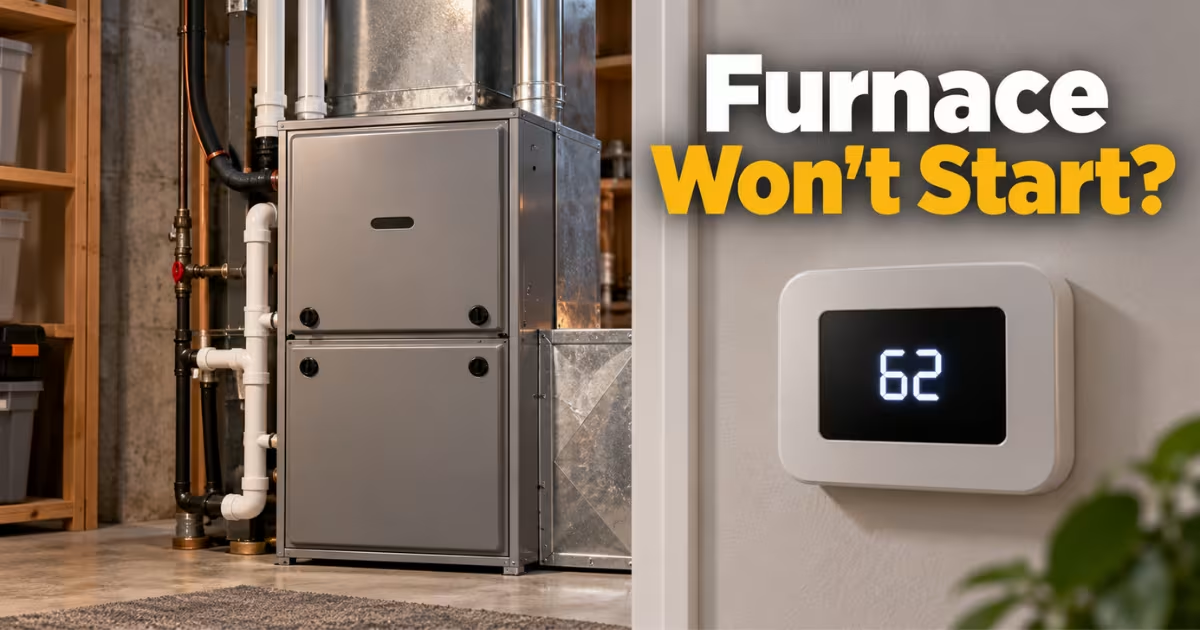
1. Your Thermostat Settings May Be the Problem
Before assuming something is wrong with the furnace itself, check the thermostat.
Make sure the thermostat is set to HEAT and that the temperature setting is higher than the current temperature inside your home.
Also check the fan setting. If the thermostat fan is set to ON, the blower may continue circulating air even when the furnace is not actively heating. That can cause room-temperature or cooler air to come through the vents between heating cycles.
Try setting the fan to AUTO so the blower operates primarily when the furnace is producing heat.
If your thermostat settings are correct and the furnace is still blowing cold air, continue checking for other possible causes.
2. The Furnace May Not Have Heated Up Yet
A short burst of cool air when your furnace first starts can sometimes be normal.
The blower may begin moving air before the furnace has fully heated the air moving through the system. Within a short period, the air coming from the vents should become noticeably warmer.
If the furnace continues blowing cold air for several minutes or never produces warm air at all, there may be another problem that needs attention.
Pay particular attention if this is a new behavior or if your furnace previously began producing warm air much more quickly.
3. A Dirty Furnace Filter May Be Restricting Airflow
A dirty air filter is one of the simplest furnace problems to check, but it can have a significant effect on heating performance.
As the filter becomes clogged with dust and debris, airflow through the heating system becomes restricted. The furnace may have to work harder to move air, and in some situations the system can become too hot.
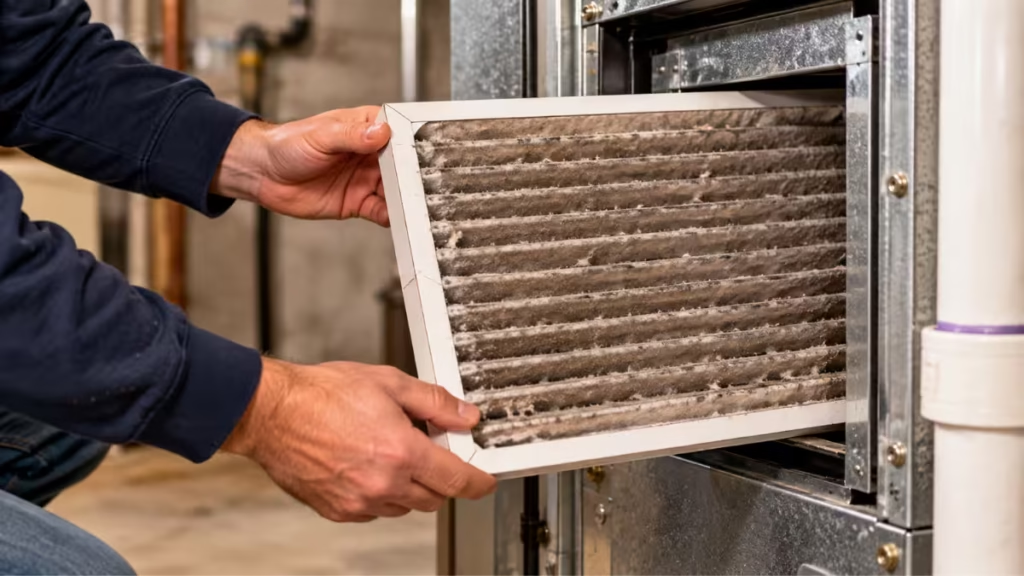
Modern furnaces have safety controls designed to protect the equipment. If the furnace overheats, the burners may shut down while the blower continues operating. The result can be cool or cold air coming from your vents.
Check the furnace filter and replace it if it is visibly dirty or overdue for replacement.
Regular HVAC maintenance can also help identify airflow problems before they lead to heating failures or unexpected repairs.
4. There May Be an Ignition or Pilot-Light Problem
A gas furnace needs to successfully ignite the burners before it can produce warm air.
Depending on the type and age of your furnace, the system may use an electronic ignition system or another type of ignition component. If the furnace cannot ignite properly, the blower may continue circulating air even though the burners are not producing heat.
Possible ignition problems can involve several components, and they should be diagnosed by a trained HVAC technician.
If your furnace repeatedly tries to start but does not produce heat, avoid attempting to repair gas or ignition components yourself. Professional diagnosis is the safest way to determine what is preventing the furnace from operating correctly.
5. The Flame Sensor May Be Dirty or Failing
The flame sensor is an important safety component inside many gas furnaces.
Its job is to confirm that the burners have successfully ignited. If the furnace cannot properly detect a flame, the system may shut the burners down to prevent unsafe operation.
This can sometimes cause a furnace to begin heating briefly and then stop, while the blower continues circulating cooler air through the home.
A dirty, damaged, or failing flame sensor should be inspected by an HVAC professional. Although the component may seem small, it plays an important role in the safe operation of the furnace.
6. Your Furnace May Be Overheating
It may sound unusual, but a furnace that is overheating can actually lead to cold air coming from the vents.
Restricted airflow, a clogged filter, blower problems, or other internal issues can cause excessive heat to build up inside the furnace.
When that happens, safety controls may shut down the burners while allowing the blower to continue running in an attempt to cool the system.
Signs of an overheating furnace may include frequent cycling, unusual smells, inconsistent heating, or a furnace that produces warm air briefly before switching to cool air.
Because overheating can involve multiple components and safety controls, professional furnace service is recommended if the problem continues.
7. There May Be a Larger Furnace or Airflow Problem
If the thermostat, filter, and basic settings all appear normal, your furnace blowing cold air may be caused by a more significant heating-system problem.
Possible issues can include:
- Blower motor problems
- Electrical or control-board issues
- Gas supply problems
- Ductwork or airflow concerns
- Ignition-system failures
- Aging furnace components
The symptoms can often look similar even though the underlying causes are very different.
A professional HVAC technician can test the heating system, identify the actual problem, and explain the appropriate repair options rather than replacing parts based on guesswork.
What Can You Safely Check Before Calling for Furnace Repair?
There are a few simple things homeowners can check before scheduling service.
Make sure your thermostat is set to HEAT, the fan is set to AUTO, and the temperature setting is above the current room temperature.
You can also check the furnace filter and replace it if it is dirty. Make sure the supply vents throughout the home are open and unobstructed.
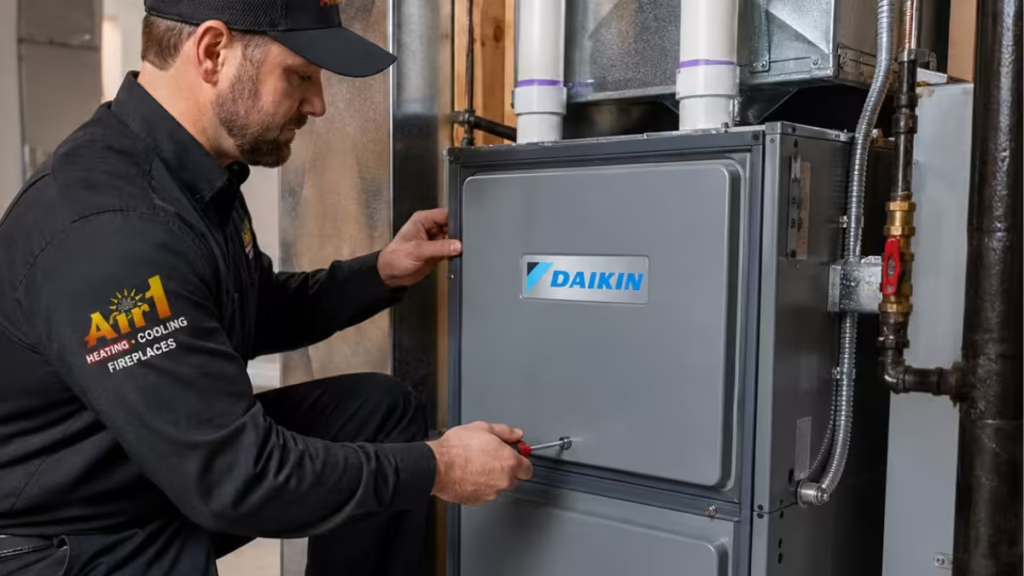
If the furnace still does not produce warm air after these basic checks, it is usually time for professional diagnosis.
Avoid opening the furnace cabinet or attempting repairs involving gas lines, ignition components, electrical systems, burners, or other internal furnace parts.
When Should You Call for Furnace Repair?
If your furnace continues blowing cold air, professional service can help determine why the system is not heating correctly.
You should consider scheduling furnace repair if:
- The furnace runs but never produces warm air
- Warm air quickly turns cold
- The furnace repeatedly starts and stops
- The burners will not remain on
- You hear new or unusual furnace noises
- The system displays an error code
- The problem keeps returning
- Your home is not reaching the thermostat setting
If you smell gas, leave the area and follow the appropriate emergency procedures rather than attempting to troubleshoot the furnace yourself.
Adkisson Air1 provides professional furnace diagnostics and repair for homeowners throughout Holly and surrounding Southeast Michigan communities.
Should You Repair or Replace a Furnace That Keeps Blowing Cold Air?
A furnace blowing cold air does not automatically mean you need a new furnace.
Many furnace problems can be repaired, particularly when the system has otherwise been reliable and the repair involves a serviceable component.
However, replacement may deserve consideration when an older furnace begins experiencing repeated breakdowns, rising repair costs, declining efficiency, or ongoing comfort problems.
Factors to consider include the age of the furnace, previous repair history, the cost of the current repair, heating performance, energy efficiency, and the overall condition of the system.
If you are already weighing those options, read our guide Should I Repair or Replace My Furnace? 7 Signs It May Be Time for a New Furnace for additional information.
If replacement makes more sense, Adkisson Air1 also provides professional furnace installation and free estimates on new heating systems.
Can Regular Furnace Maintenance Help Prevent Problems?
Regular furnace and HVAC maintenance can help identify developing issues before they become unexpected heating failures.
During routine maintenance, a technician can check system operation, airflow, electrical components, safety controls, and other important parts of the heating system.
Maintenance cannot prevent every furnace repair, but it can help keep your system operating safely and efficiently while giving you an opportunity to address problems before the coldest Michigan weather arrives.
Regular HVAC maintenance can also help support efficient operation and reduce unnecessary strain on your heating system. ENERGY STAR recommends regular heating and cooling system maintenance as part of keeping equipment operating efficiently.
Furnace Repair in Holly and Surrounding Michigan Communities
If your furnace is running but your home still feels cold, Adkisson Air1 can help.
Our experienced technicians provide professional furnace repair and diagnostics for homeowners in Holly, Fenton, Grand Blanc, Clarkston, Davison, and surrounding Southeast Michigan communities.
We will inspect the heating system, determine why the furnace is blowing cold air, and explain your repair options clearly. If the furnace is reaching the point where replacement makes more sense, our team can also help you compare new heating-system options for your home.
Furnace Blowing Cold Air? Adkisson Air1 Can Help
Don’t wait for a minor heating problem to become a complete furnace breakdown.
If your furnace is blowing cold air, Adkisson Air1 can diagnose the problem and help restore reliable heat to your home.
Call Adkisson Air1: 810-498-2260