Why Is My Water Heater Leaking From the Bottom?
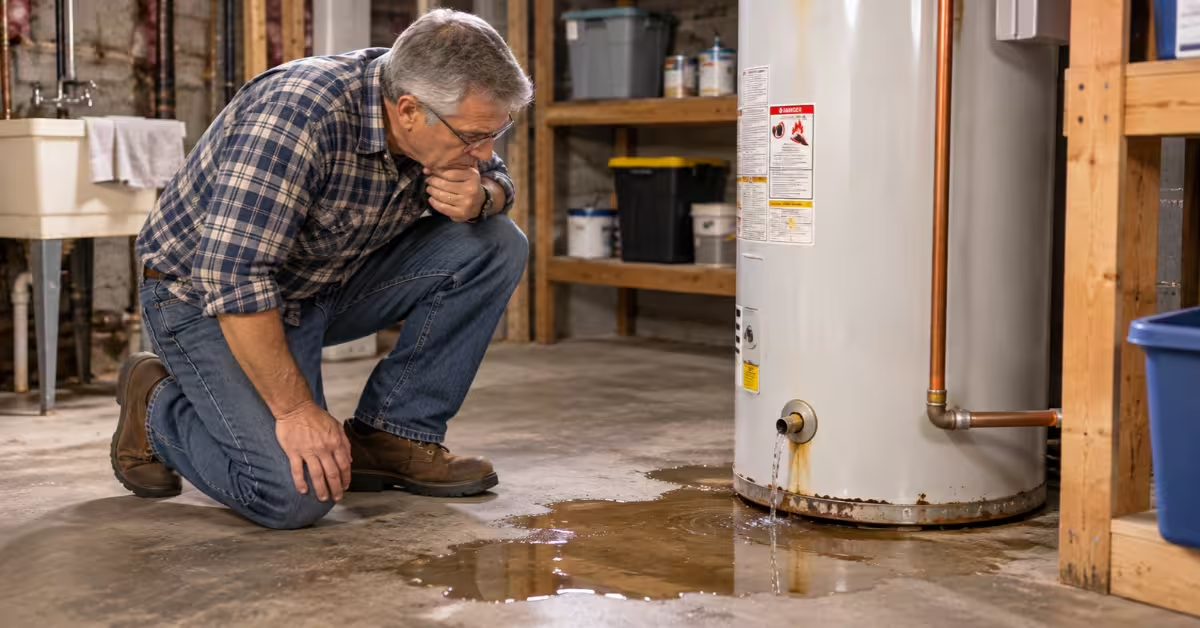
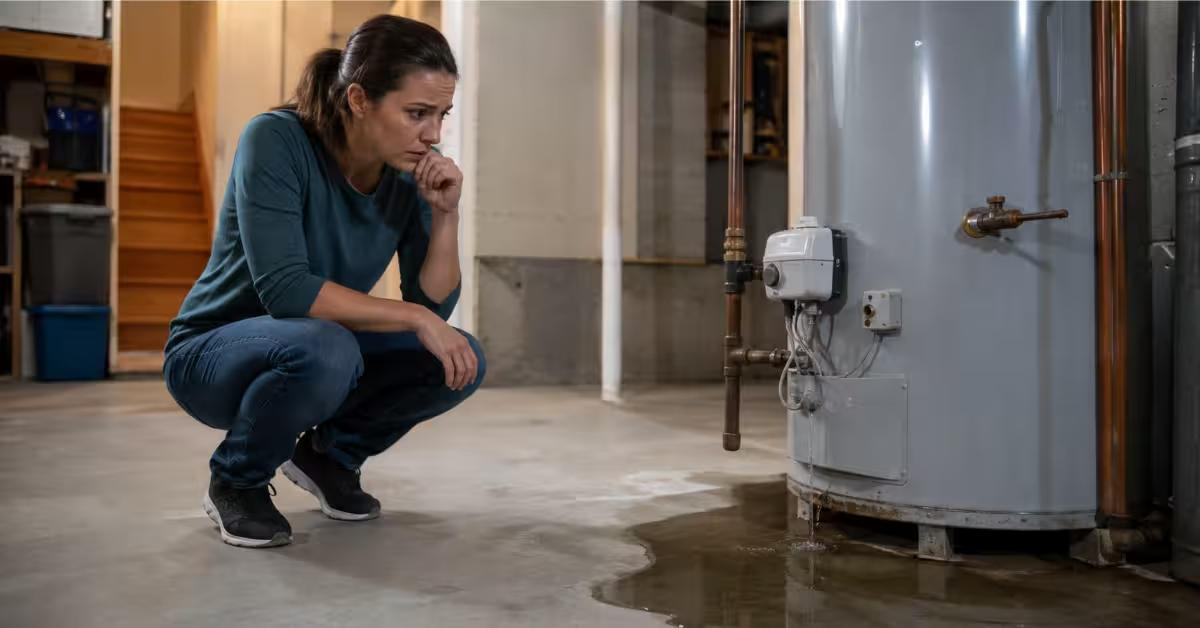
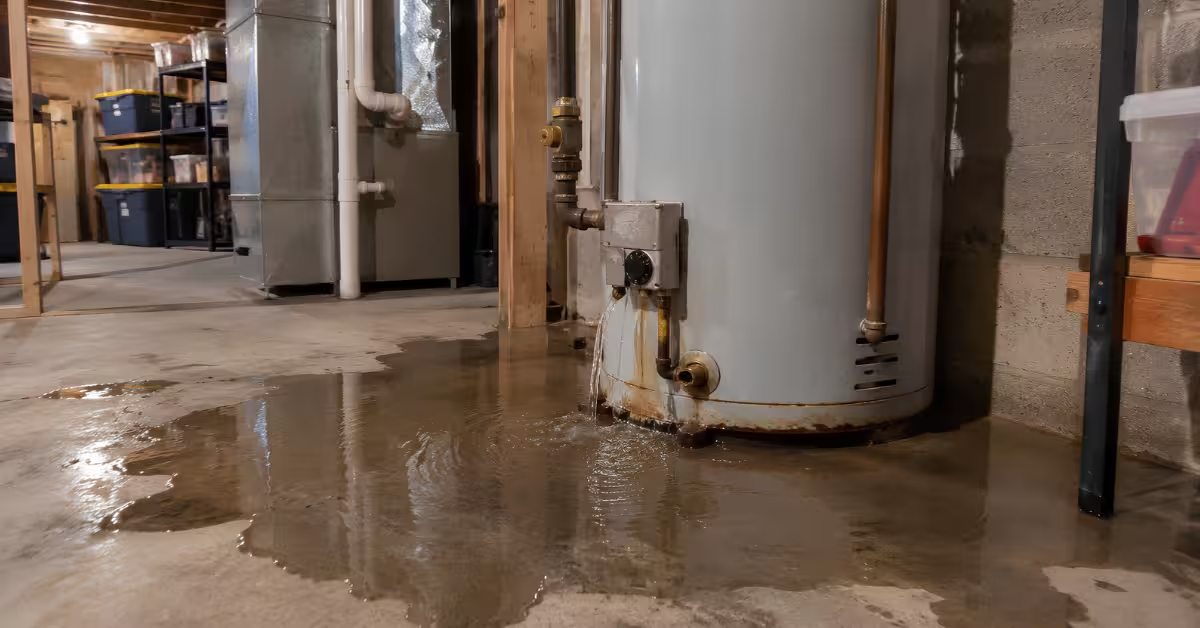
Finding a puddle at the base of your tank is stressful, and a water heater leaking from the bottom is not something to ignore. Sometimes the cause is a small, repairable problem. Other times, the tank itself has failed and water is escaping because it has nowhere else to go.
The good news is that you can take a few safe steps right now to limit the damage, and a few simple clues can help you tell which situation you are in. Here is what to do first, where a water heater leaking from the bottom is really getting its water, and how to decide between repair and replacement.
What to Do Right Away If Your Water Heater Is Leaking
Before you try to figure out the cause, protect your home and your family.
- Shut off the power or gas. For an electric water heater, turn off the breaker. For a gas water heater, turn the gas control to OFF or PILOT.
- Shut off the cold water supply. The shutoff valve is usually on the pipe entering the top of the tank. Turn it clockwise until it stops.
- Keep away from standing water near outlets or wiring. If water is near electrical components and you cannot reach the breaker safely, stay back and call a professional.
- Contain the water. Use towels or a wet vacuum, and move anything valuable away from the area.
If you smell gas, leave the home right away. Call 911 and your gas utility from outside, and do not use light switches or try to relight anything.
Common Reasons for a Water Heater Leaking From the Bottom
Water that collects at the bottom of the tank is not always coming from the bottom. Gravity moves it downward, so the real source may be higher up. Here are the most common causes.
1. Loose or Failing Pipe Connections
The cold and hot water connections on top of the tank can loosen or corrode over time. Water runs down the side of the tank and pools underneath. This is one of the more repairable causes.
2. The Temperature and Pressure Relief Valve
This safety valve opens to release excess pressure or heat. If it is leaking or dripping from the discharge pipe, the valve may be faulty, or the tank may be running at unsafe pressure or temperature. Do not cap or plug this valve. Have a technician check it.
3. A Leaking Drain Valve
The drain valve near the bottom of the tank is used for flushing sediment. It can wear out or fail to seal tightly, causing a slow drip. Replacing a drain valve is usually a straightforward repair.
4. Condensation
On some units, especially high-efficiency gas models, moisture can form and drip during operation. Condensation tends to be light, it appears while the unit is heating, and it does not keep coming back after the tank has been dry for a while. A steady or growing puddle is not condensation.
5. A Corroded or Cracked Tank
Over the years, sediment builds up in the bottom of the tank and the protective lining breaks down. Eventually, the steel can corrode through, and the tank begins to leak from the bottom or the seams. If the water is coming from the tank itself, repair is generally not an option.
Can a Leaking Water Heater Be Repaired?
With a water heater leaking from the bottom, whether it can be repaired depends entirely on where the leak is.
Often repairable: loose or worn fittings, a faulty relief valve, or a leaking drain valve. These are components that can be replaced without touching the tank.
Not repairable: a leak from the tank itself. Once the inner tank has failed, there is no safe way to seal it. Patching or sealing the tank is only a temporary delay, and a failed tank can release a large amount of water without warning.
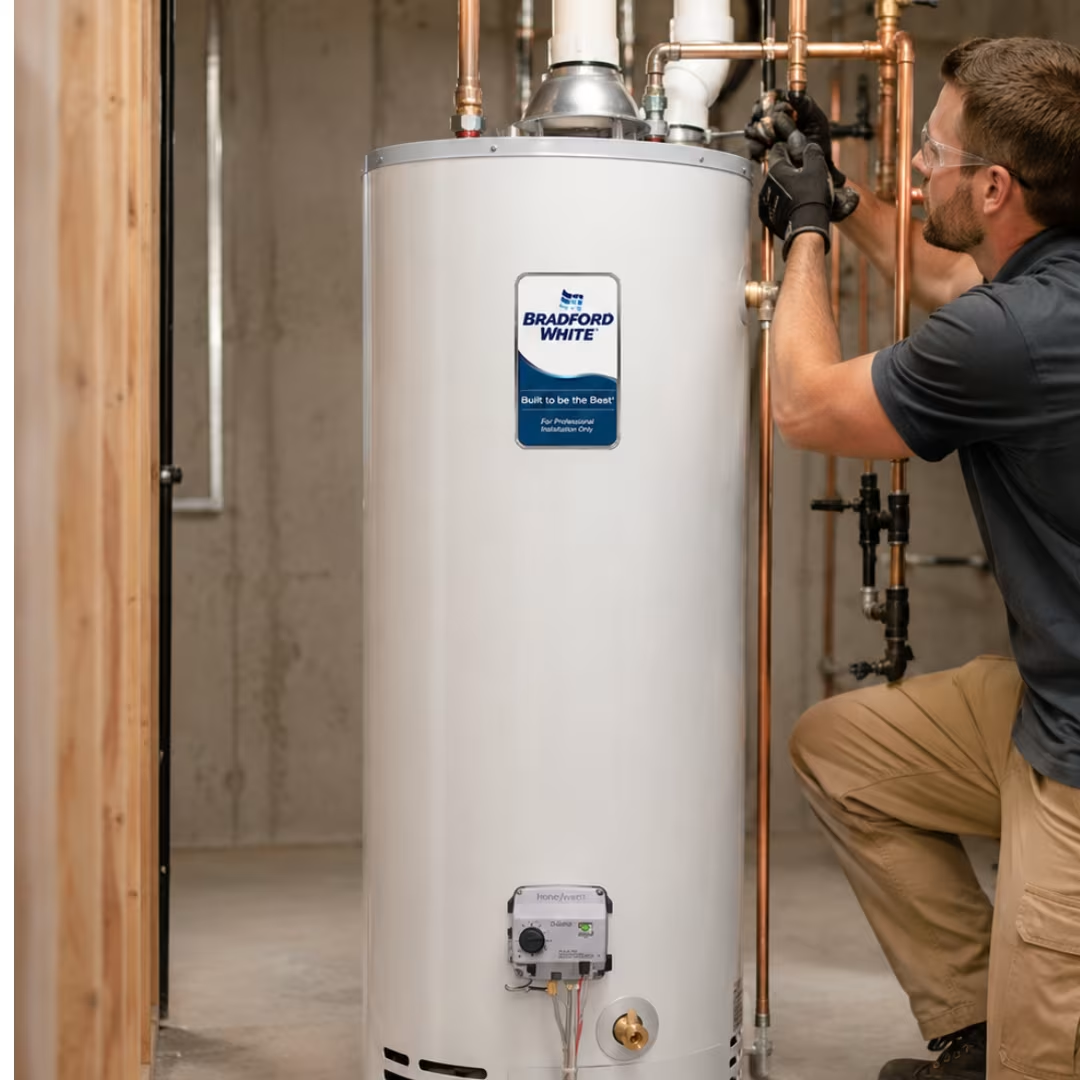
A technician can usually tell the difference quickly. If you are not sure where the water is coming from, our water heater repair team can inspect the unit and give you a clear answer before you spend money on the wrong fix.
When Should You Replace a Leaking Water Heater?
Replacement is usually the right call for a water heater leaking from the bottom when:
- The leak is coming from the tank body or seams
- The water heater is roughly 8 to 12 years old or older
- You have had repeated repairs in a short period
- The water coming out of your taps looks rusty or has a metallic smell
- You hear popping or rumbling from sediment buildup
- Repair costs are approaching the value of a new unit
If your water heater is newer and the leak is clearly from a fitting or valve, repair may make more sense. For a closer look at the decision, read our guide, Water Heater Repair or Replacement: How to Know Which You Need.
If you do replace it, this is a good time to think about size and type. The Energy.gov water heating guide explains how different water heater types compare, and our team can help you choose the right size for your household’s hot water use. Financing is also available with approved credit. Learn more on our financing page.
Why Michigan Homes Are Hard on Water Heaters
Michigan winters mean colder incoming water, which makes your water heater work harder to reach temperature. Many homes in our area also have hard water, which accelerates sediment buildup in the bottom of the tank. Over time, that sediment can shorten the life of the tank and contribute to corrosion and leaks.
Flushing the tank and having the unit checked as it ages can help catch problems earlier. It will not make a tank last forever, but it gives you the chance to plan a replacement before a leak forces one.
Water Heater Leaking? Adkisson Air 1 Can Help
If you have a water heater leaking from the bottom, do not wait for a small puddle to become a flooded basement. Adkisson Air 1 provides water heater repair and water heater installation for homeowners in Holly, Fenton, Grand Blanc, Clarkston, Davison, and surrounding Michigan communities.
Our licensed technicians will find the source of the leak, explain whether repair or replacement makes sense, and give you clear options before any work begins.
Call Adkisson Air 1 at (810) 498-2260